Mwale Medical and Technology City (MMTC) has secured more than $4.3 billion in investment commitments to support the expansion of its smart-city model across Africa, as the company engages investors and government officials on the sidelines of the 81st United Nations General Assembly (UNGA) in New York.
The commitments were finalized during a series of side events focusing on diaspora investment and impact, artificial intelligence (AI), healthcare and sustainable development.
The MMTC team is using the global gathering to showcase its vision of developing 18 sustainable smart cities across 12 African countries by 2050, with the model combining healthcare, technology, manufacturing, housing, education and other essential services.
MMTC Founder Julius Mwale said the response from investors and African government representatives demonstrates growing interest in African-led development models that combine technology with social and economic transformation.
“Our vision is to demonstrate that Africa can build cities that are not only technologically advanced, but also sustainable, inclusive and designed around the needs of communities,” Mwale said.
He said the investments would help accelerate the expansion of the MMTC model beyond Kenya and create platforms for communities to benefit from new technologies, healthcare innovations and economic opportunities.
“The $4.3 billion in commitments is an important milestone, but more importantly, it reflects confidence in the potential of African communities. We want these investments to translate into jobs, better healthcare, stronger local economies and infrastructure that improves people’s lives,” Mwale said.
MMTC has positioned its smart-city approach around the integration of technology and essential services, with healthcare and innovation forming a central component of the model.
The City is also using the UNGA platform to engage in discussions around artificial intelligence and green powered data centers and AI ‘s potential application in healthcare and other sectors.
African governments and investors are increasingly examining how emerging technologies can be deployed to address challenges such as access to healthcare, employment, infrastructure and service delivery.
Mwale said Africa should be an active participant in shaping the future of AI rather than simply becoming a consumer of technologies developed elsewhere.
“Artificial intelligence is changing the way economies operate, and Africa must be part of that transformation. Our responsibility is to ensure that technology is applied in ways that solve real problems and create opportunities for our people,” he said.
The City’s 2050 plan seeks to replicate the principles behind MMTC in different African markets while allowing each development to respond to the needs and opportunities of its host community.
Mwale said the engagements in New York had also highlighted the role of the African diaspora in financing and supporting development on the continent.
“The African diaspora has capital, expertise and global networks that can help accelerate development at home. We are creating opportunities for that expertise and investment to connect with projects that can have measurable impact,” he said.
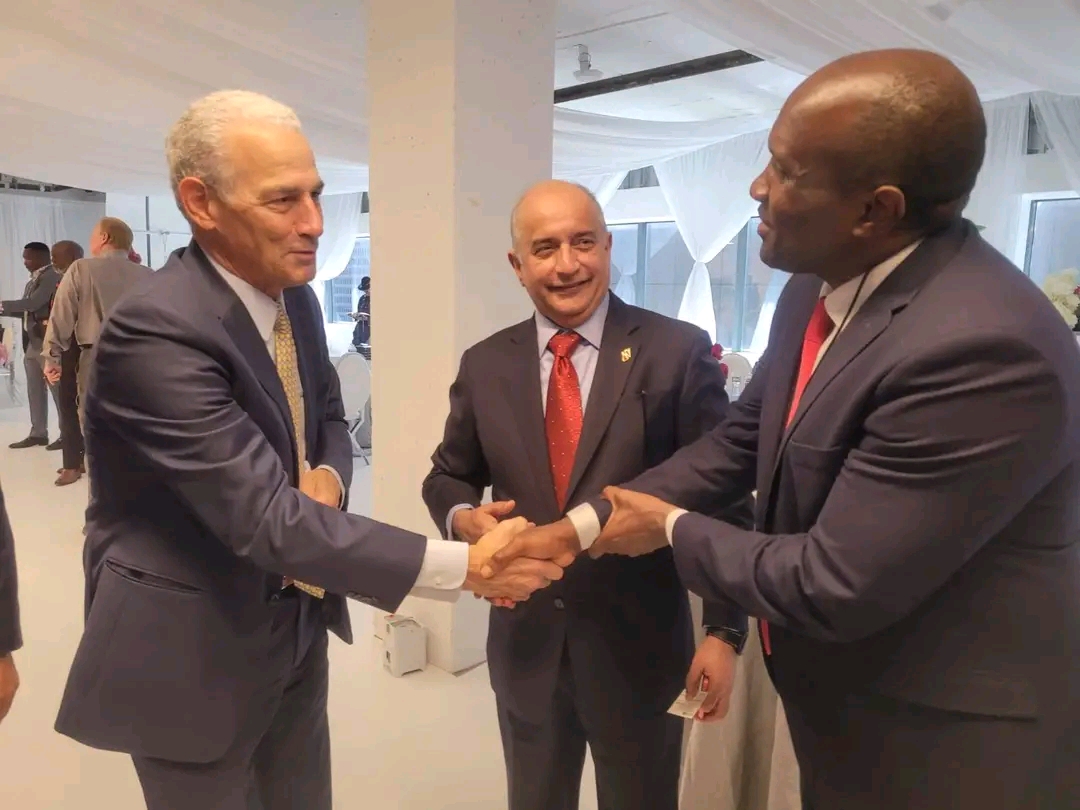
The UNGA side events have brought together investors, policymakers, technology leaders, healthcare stakeholders and members of the African diaspora, providing a platform for discussions on financing sustainable development.
MMTC is a US $ 2 billion sustainable smart-city development in Butere, Kakamega County that integrates healthcare, technology, education, housing, manufacturing, agriculture and other economic activities.
The development is designed around the use of technology and sustainable infrastructure to create jobs, expand access to essential services and support economic opportunities for surrounding communities.
MMTC is seeking to expand this model across Africa through its vision of establishing 18 sustainable smart cities in 12 African countries by 2050.